

The Only Conference Freebies Attendees Actually Keep
Every conference attendee knows the drill. You arrive at registration and receive a tote bag. Inside the tote bag is another tote bag, a branded pen, a stress ball shaped like something vaguely related to the industry, a lanyard you will wear for two days and never touch again, and a printed program that was out of date before it went to press. By the time you reach baggage claim on the way home, most of it is gone. The pens made it. Maybe the tote bag, if it was a good one. Everything else went into a hotel trash can or an airport recycling bin somewhere between the closing keynote and the ride to the terminal.
This is not a new problem, but it is a wasteful one. Event organizers and exhibitors have been trying to crack the conference giveaway question for decades. The challenge is not generosity—most conferences spend meaningfully on swag—it is utility. A freebie that does not fit into the attendee's actual life after the event ends is not a keepsake. It gets thrown away.
Why Most Conference Swag Does Not Make It Home
The economics of conference swag work against the attendee from the start. Everything handed out at a trade show or conference has to be carried. Through the exhibit hall, back to the hotel room, into a suitcase that was already full when it arrived, and then onto a plane. Every item gets evaluated at some point in that journey, and most do not survive the audit.
Branded merchandise fails this test for a simple reason: it serves the brand, not the attendee. A water bottle with a company logo on it is useful. A stress ball with a company logo on it is not. A tote bag is useful until you have six of them. The value proposition of most conference swag is thin from the attendee's perspective, which is why it ends up where it ends up.
Exhibitors know this. Most marketing teams have stood at a trade show booth watching attendees sweep a pile of branded trinkets into a bag with the enthusiasm of someone clearing a hotel minibar. People take everything because it is free, not because any of it is wanted. The trinkets travel as far as the nearest trash can outside the convention center.
The One Exception
A professional headshot is the rare conference freebie that attendees seek out, plan for, and use after the event ends. The reason is straightforward. A professional headshot has real, ongoing personal value. It goes on LinkedIn, into a company directory, onto a speaker bio page, into a press kit. Every time the attendee uses it, it is useful again. No other conference giveaway does that. A branded tote bag is used until the attendee gets a better one. A headshot is used in perpetuity.
At conferences that offer a professional headshot booth, it consistently becomes the most talked-about activation on the floor. Attendees who planned to spend twenty minutes at the exhibit hall rearrange their schedule to make time for a headshot. They tell colleagues. A line forms. That line is visible. And visibility at a trade show, where every exhibitor is competing for the same attendee minutes, is worth considerably more than whatever it cost to give away five hundred stress balls.
What Happened at Human[X]
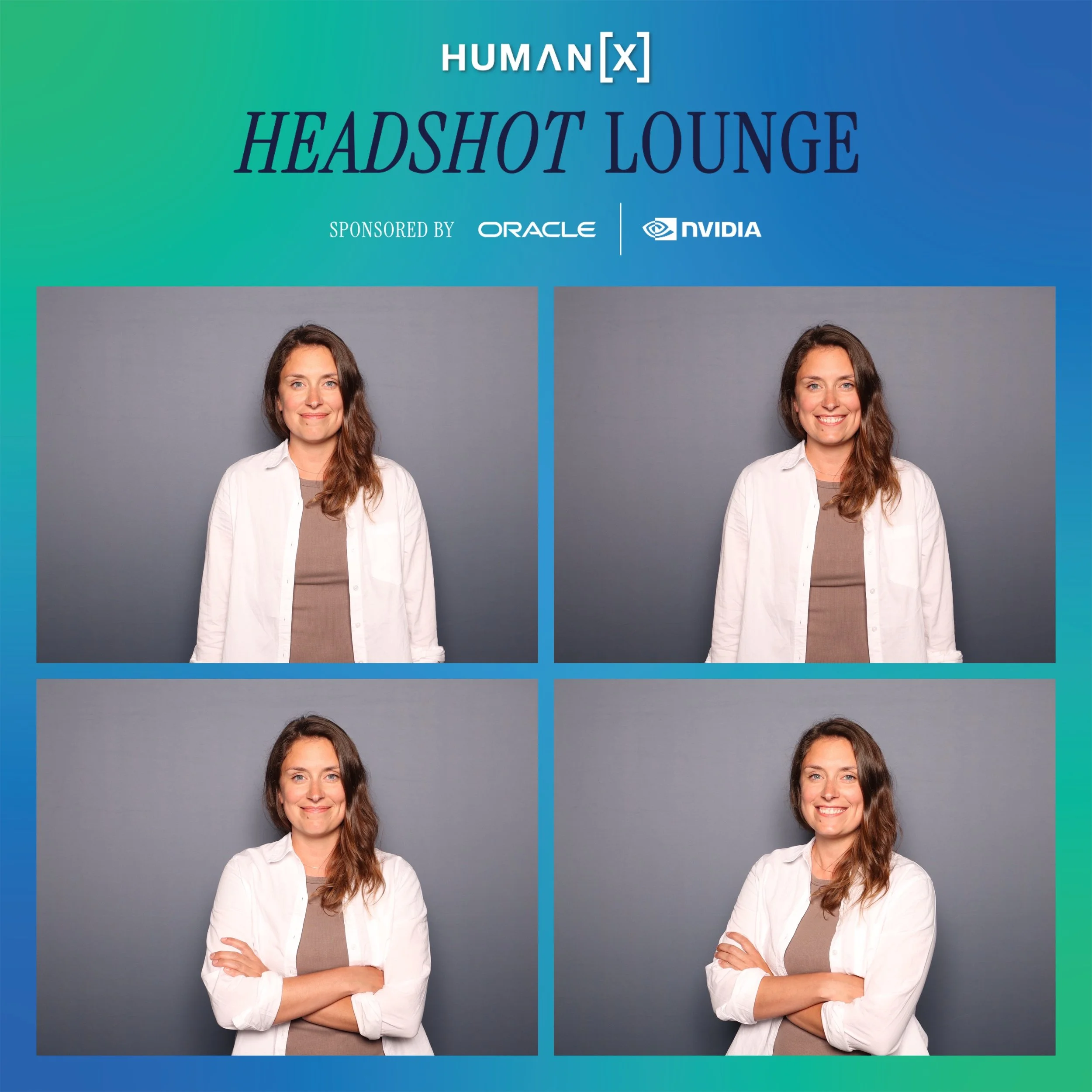
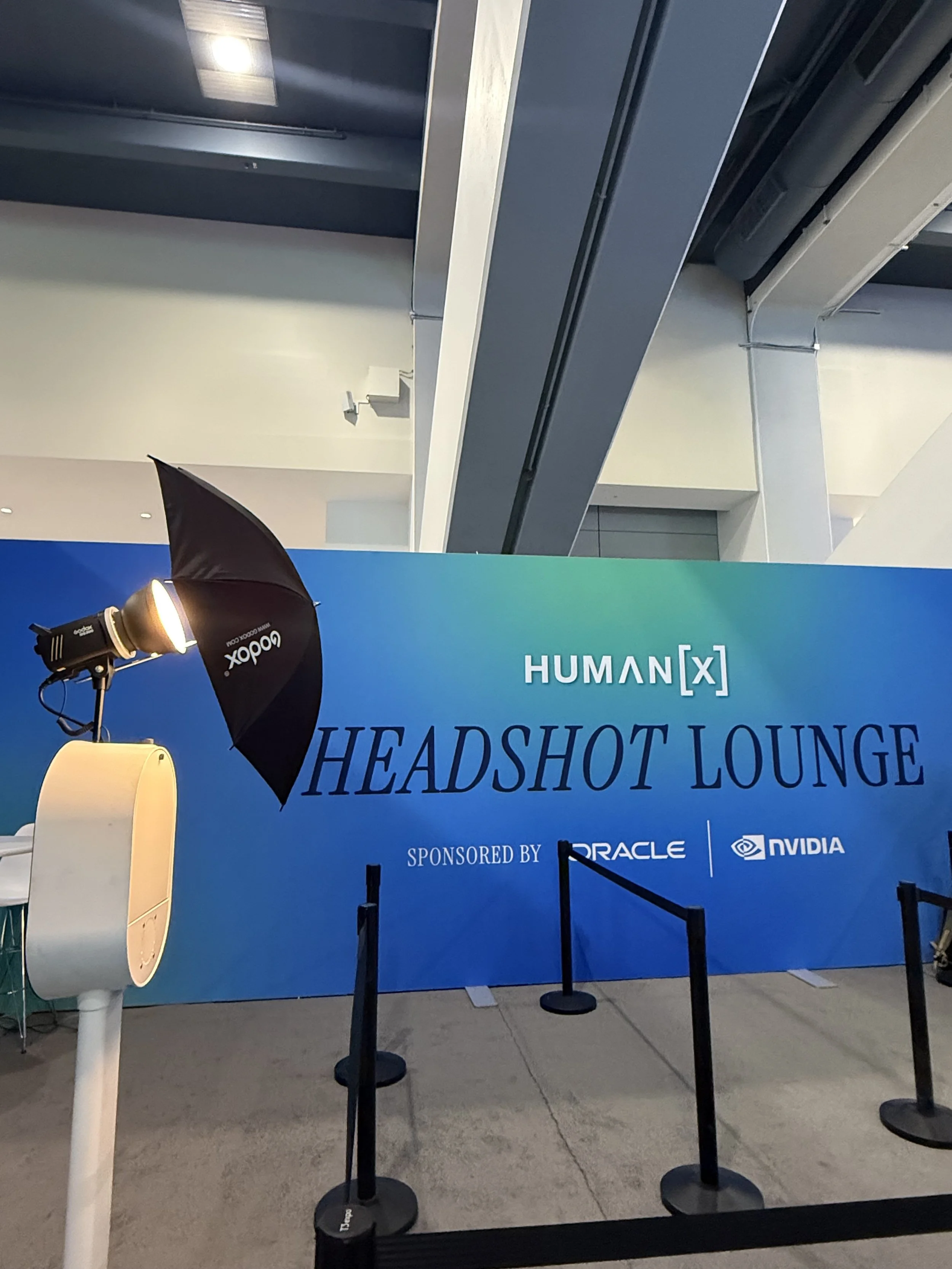
Human[X] is an AI-focused conference drawing more than 9,000 attendees. In 2025, the event added a sponsored headshot lounge, operated by The Danger Booth across three days and 18 hours, with Meta as the presenting sponsor. The lounge was integrated directly into the conference experience, with Meta's branding woven into the interactive start screens and custom digital photo frames attendees saw throughout the session.
The activation produced 2,700+ headshots in year one. Human[X] brought the lounge back for 2026, this time with Oracle and NVIDIA as co-sponsors. By the end of the second year, total headshots across both events reached 5,492. The lounge became a returning staple of the event. That does not happen with a stress ball activation.
For the sponsors, the value was threefold: brand visibility at the point of a high-value attendee interaction, lead data collected at check-in, and association with the most sought-after activation at one of the year's most prominent AI conferences. For attendees, it was simpler than that. They got a photo they actually wanted.
What This Means for Exhibitors
A headshot booth is not just a better giveaway, but a better booth strategy.
Most trade show booth traffic is passive. Attendees walk past, glance at signage, and keep moving unless something stops them. A headshot booth stops them on purpose. The offer is concrete and personal: walk in, get a professional photo, leave with something you will use on LinkedIn this week. That is a value proposition that cuts through exhibit hall noise in a way that a product demo or a branded giveaway cannot.
The lead generation component sharpens the ROI further. Every attendee who checks in for a headshot provides their name, email, and any other fields the exhibitor wants to collect. They are opting in through a positive interaction, not being scanned at a badge station. The follow-up list that comes out of a headshot booth activation is populated by people who chose to engage, which is a different quality of contact than most trade show lead gen produces. At 40 headshots per hour, a full conference day generates a meaningful volume of check-ins from a single activation. For exhibitors evaluating their trade show booth ideas, that math is worth running before the next event.
What to Look for in a Trade Show Headshot Booth
Not every headshot vendor is set up for a trade show environment. A few things worth confirming before booking:
The output has to look professional. Ask to see examples from actual trade show activations. Studio lighting, a clean backdrop, and a working photographer—not a kiosk with a ring light—produce a photo the attendee will actually use. If the sample photos look like they were taken at a party, keep looking.
Same-day delivery is the standard. Attendees should have access to their photos via a live gallery before the conference day ends. A final polished gallery follows shortly after. If a vendor is quoting a 48-hour turnaround, that is not the right setup for a trade show floor.
The footprint has to fit. A proper headshot setup needs roughly eight to ten feet of depth for lighting and backdrop clearance. Confirm the vendor's space requirements against the exhibitor's booth allocation before anything is finalized.
Lead capture should be included or available. If the exhibiting team has any interest in using the activation for lead generation, check-in data needs to be collected and exportable. This is a standard feature for any vendor built for the trade show market.
Book a Trade Show Headshot Booth
The Danger Booth runs headshot lounge activations at trade shows and conferences nationally, including in Las Vegas, Orlando, San Francisco, and Boston. Every activation includes professional photography, same-day gallery delivery, and optional lead capture for exhibitor and sponsor bookings. If you are exhibiting at an upcoming conference and want an activation that drives traffic, generates leads, and gives attendees something they will actually keep, get in touch.