
Features to Look for in a High-Quality Corporate Photo Booth
Not all corporate photo booths are the same product. The term covers everything from a consumer-grade tablet kiosk bought off Amazon to a purpose-built professional photography station operated by a trained technician. The gap in output quality between those two ends of the spectrum is immediately visible in the photos, and the gap in capability goes much further than most event planners expect until they start asking specific questions.
A high-quality corporate photo booth is defined by six things: the camera and lens system, the lighting setup, the branding and customization options, the output format and resolution, the photo delivery method, and for trade show and sponsor activations, the data capture capability. Each of these features has a professional standard and a consumer shortcut, and knowing the difference is what separates an activation attendees are proud of from one they quietly skip.
Camera and Lens System
The camera is where the quality gap between a professional corporate photo booth and a cheap alternative is most obvious, even if most buyers do not know to ask about it.
Consumer photo booth kiosks use webcams, tablet cameras, or low-end point-and-shoot systems. They produce acceptable photos in bright, controlled conditions and noticeably degraded results in the varied lighting of a conference hall, ballroom, or trade show floor. A professional corporate photo booth uses a DSLR or mirrorless camera body with an interchangeable lens, typically a portrait-length prime or short zoom, which produces sharper images, better subject separation from the background, and significantly better performance in mixed or low light.
The practical difference shows up in the photo. A DSLR-based setup produces a photo that looks like it was taken in a studio. A tablet kiosk produces a photo that looks like it was taken on a phone. For a social event, that difference may not matter. For a professional conference where attendees are hoping to use the photo on LinkedIn or in a company directory, it matters considerably.
Lighting
Lighting is the second major quality differentiator and the one most commonly underestimated. A photo can be taken with a professional camera and still look flat, unflattering, or inconsistent if the lighting setup is inadequate.
The standard for a professional corporate photo booth is studio-quality strobe or continuous lighting on a stand, positioned to flatter the subject rather than simply illuminate the space. Clamshell lighting, a two-light setup with a key light and fill, or a softbox and reflector configuration are all approaches that produce even, professional-looking results across a range of skin tones and in varied ambient conditions.
The alternative is a ring light mounted to a kiosk or a reliance on venue ambient lighting with a minor fill. Ring lights produce a characteristic circular catchlight in the subject's eyes and a flat, frontally-lit look that reads as consumer-grade. Ambient lighting produces inconsistent results depending on where the booth is placed and what the venue lighting is doing around it.
For any event where the photo output will be used professionally, studio-quality lighting is not optional. It is the single feature most directly responsible for whether attendees look at their photo and feel good about it or close the file and move on.
Branding and Customization
A corporate photo booth is a brand activation, not just a photography service. The branding applied to the output and the physical setup is how sponsors, exhibitors, and event organizers make the activation work for their marketing goals, not just their attendees.
Branding options on a professional corporate photo booth fall into two categories: output branding and physical branding.
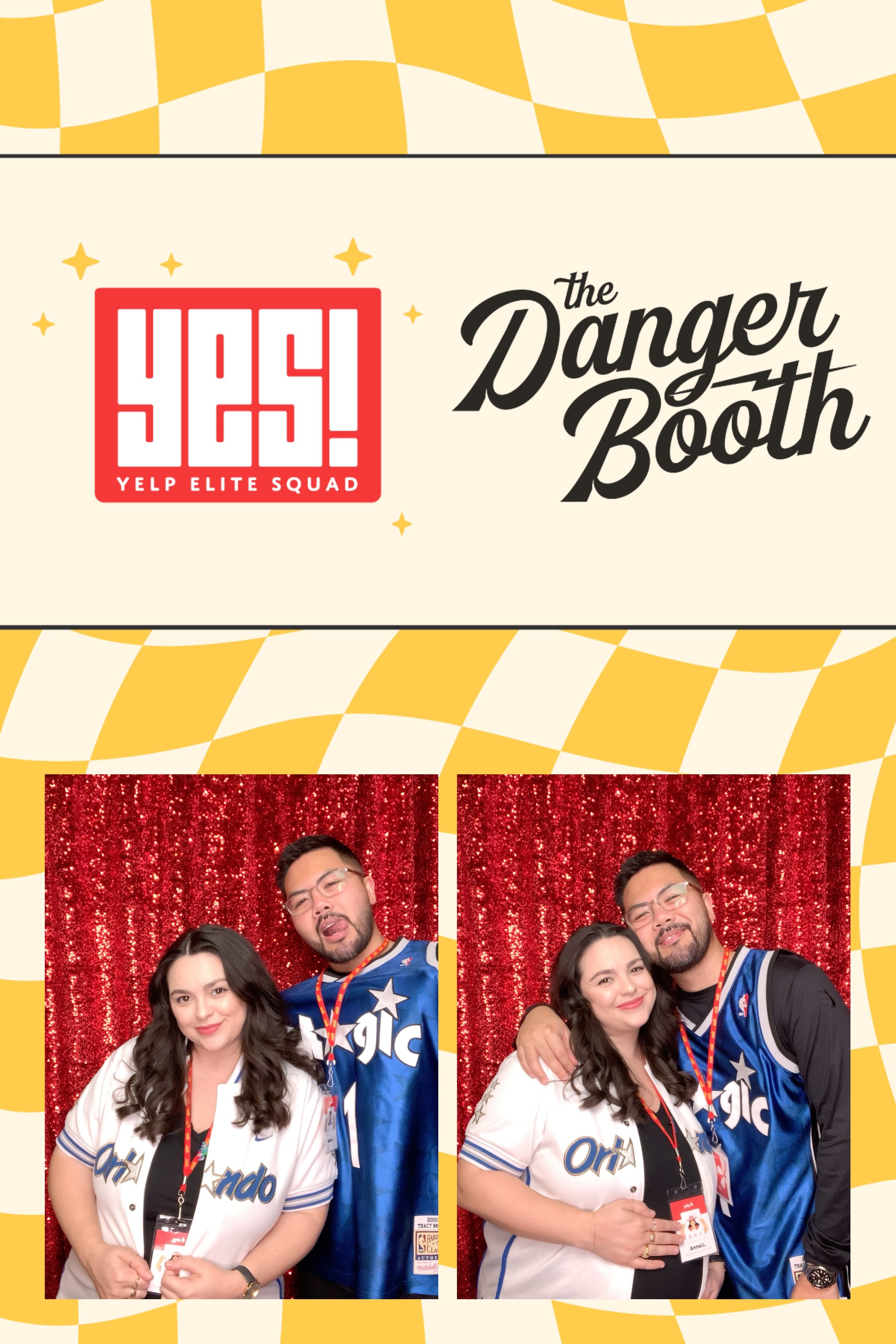
Output branding covers the digital overlay or print template applied to each photo. A well-designed branded photo booth template includes the event name or sponsor logo, the date, and optionally a hashtag or URL, composed in a way that feels intentional rather than stamped-on. The template should be custom-designed for the event, not a generic frame with a logo dropped in. Custom-branded photo booth output is what gets shared on social media and used in post-event communications, so the design quality matters beyond just the event floor.
Physical branding covers the backdrop, the facade of the booth structure if one is used, and any signage around the activation. A professional vendor will offer branded backdrops, step-and-repeat options, and custom facade wraps. This is where the activation becomes recognizable from across the room and draws attendees toward it before they are even close enough to read the signage.


Output Format and Resolution
What the photo booth produces, and in what format, determines how useful it is to attendees after they leave.
A professional corporate photo booth should offer full-resolution digital output as a baseline. The image file delivered to each attendee should be large enough to be used in print, on LinkedIn, and in professional documents without compression artifacts or pixelation.
For headshot activations, photos are delivered digitally via a live gallery the same day, followed by a final gallery with a light finishing pass — not heavy retouching, but a quick polish that ensures every image is ready to use. For local social event activations, physical prints are available as an add-on via dye-sublimation, which produces a water-resistant, smudge-proof keepsake that looks and feels like a professional photograph. Ask your vendor which output options are available for your specific event type before you book.
Photo Delivery Method
At a conference or trade show, delivery speed is directly tied to how much value the attendee gets from the activation. A photo delivered to their phone before they leave the booth is one they will look at, share, and potentially use immediately. A photo delivered three days later in a gallery link is one they may never open.
For headshot activations, the standard to expect is a live gallery available the same day, with a final polished gallery to follow. For photo booth activations, look for real-time digital delivery so the image is on the attendee's device before they move on. A vendor running professional equipment and software should be able to deliver either without friction. Ask specifically how delivery works for each service so there are no surprises on the event day.
Data Capture and Lead Generation
This is the feature that separates a trade show photo booth from a conference entertainment activation, and it is the one most commonly absent from vendor conversations until an exhibitor or sponsor asks about it directly.
A trade show photo booth that collects attendee contact information during check-in is a lead generation tool. Every attendee who steps up and provides their name, email, company, and job title in exchange for a professional photo is a qualified opt-in lead for the exhibitor running the activation. At a conference with two thousand attendees and a headshot booth drawing consistent traffic, that is a meaningful number of contacts collected in a single event day through a completely natural interaction.
The data capture capability to ask about includes: what fields are collected at check-in, whether the data can be exported after the event in a standard format such as CSV, and whether the vendor has a process for handling consent and data privacy in compliance with the event's requirements.
Not every corporate photo booth vendor has built this capability. It requires software infrastructure beyond a basic photo delivery system. A vendor who does not offer data capture at a trade show activation is leaving a significant portion of the activation's value unclaimed. For exhibitors and sponsors evaluating a branded photo booth rental for a trade show, this question should be part of the initial vendor conversation, not an afterthought.
The Difference Between a Professional Corporate Photo Booth and a Cheap Alternative
The clearest way to summarize the gap: a professional corporate photo booth is built around the output and the attendee experience. A cheap alternative is built around the lowest cost to deliver a photo.
The practical differences show up across every feature. Professional: DSLR with studio lighting, neutral or custom backdrop, real-time delivery, high-resolution output, optional data capture, on-site technician. Budget: tablet kiosk, ring light or ambient lighting, post-event gallery, compressed image output, no data collection, no on-site support. Both will produce a photo. Only one produces a photo an attendee at a professional conference will actually use. That distinction is worth more than the price difference between them, particularly at events where the photo booth or headshot activation is a primary brand touchpoint for sponsors and exhibitors.
Book a Corporate Photo Booth Built for Professional Events
The Danger Booth provides corporate photo booth and headshot lounge services for conferences, trade shows, and large-scale corporate events nationally. Every activation uses professional camera equipment, studio lighting, real-time digital delivery, and fully custom branded output. Data capture is available for trade show and exhibitor activations.
Past clients include HubSpot, American Express, and Yelp. If you are evaluating corporate photo booth rental for an upcoming event and want to talk through what the right setup looks like for your format and goals, get in touch.